Contact,
made visible.
GlowTact turns pressure-induced optical coupling into a direct, high-contrast tactile image using a microtextured clear gel, a black membrane, and single-color illumination.
How contact
becomes signal.
One pressure control drives the deformation, the air-gap closure, and the camera response.
Asperity coupling
HEIGHT EXAGGERATED
A fixed oblique projection shows contact islands expanding across the P2500-inspired surface.
Coupled area
Camera response
SEQUENCE
- 00 Air gap
- 01 Local coupling
- 02 Expanded coupling
STATE 00
An air gap still separates membrane and gel; the camera sees no contact signal.
Qualitative model of the reported P2500 texture and coupling mechanism. Conceptual visualization. Geometry and optical paths are schematic and are not a calibrated mechanical or ray-tracing simulation.
Why simple.
- Single-color light
- One LED, no RGB channels.
- Monochrome camera
- Greyscale sensor; no photometric stereo.
- No coatings
- Gel and membrane alone; no markers, no calibration.
- Durable membrane
- Medical-grade nitrile; resists wear and chemicals.
One principle.
Three bodies.
The same pressure-induced coupling drives all three.
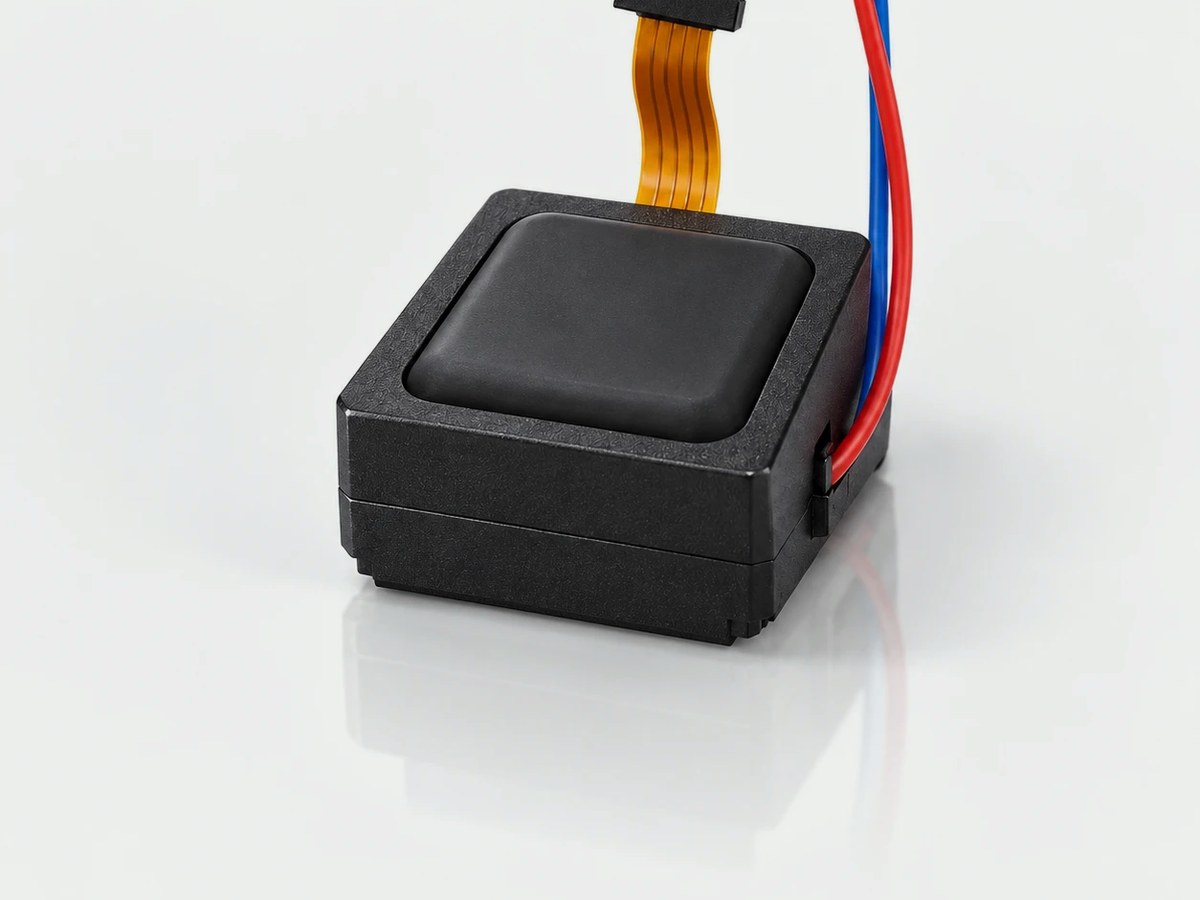
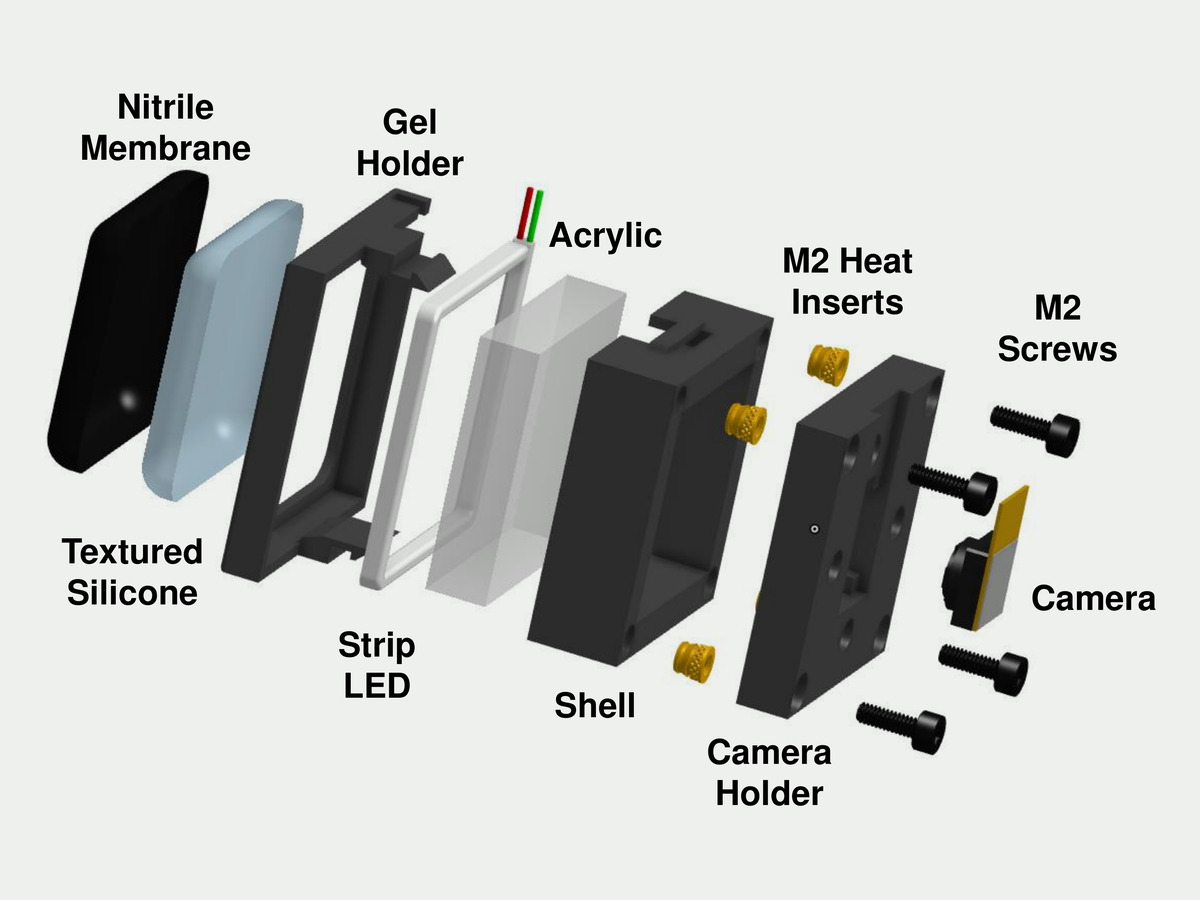
Flat pad
Nitrile membrane over textured silicone; strip LED around the acrylic.
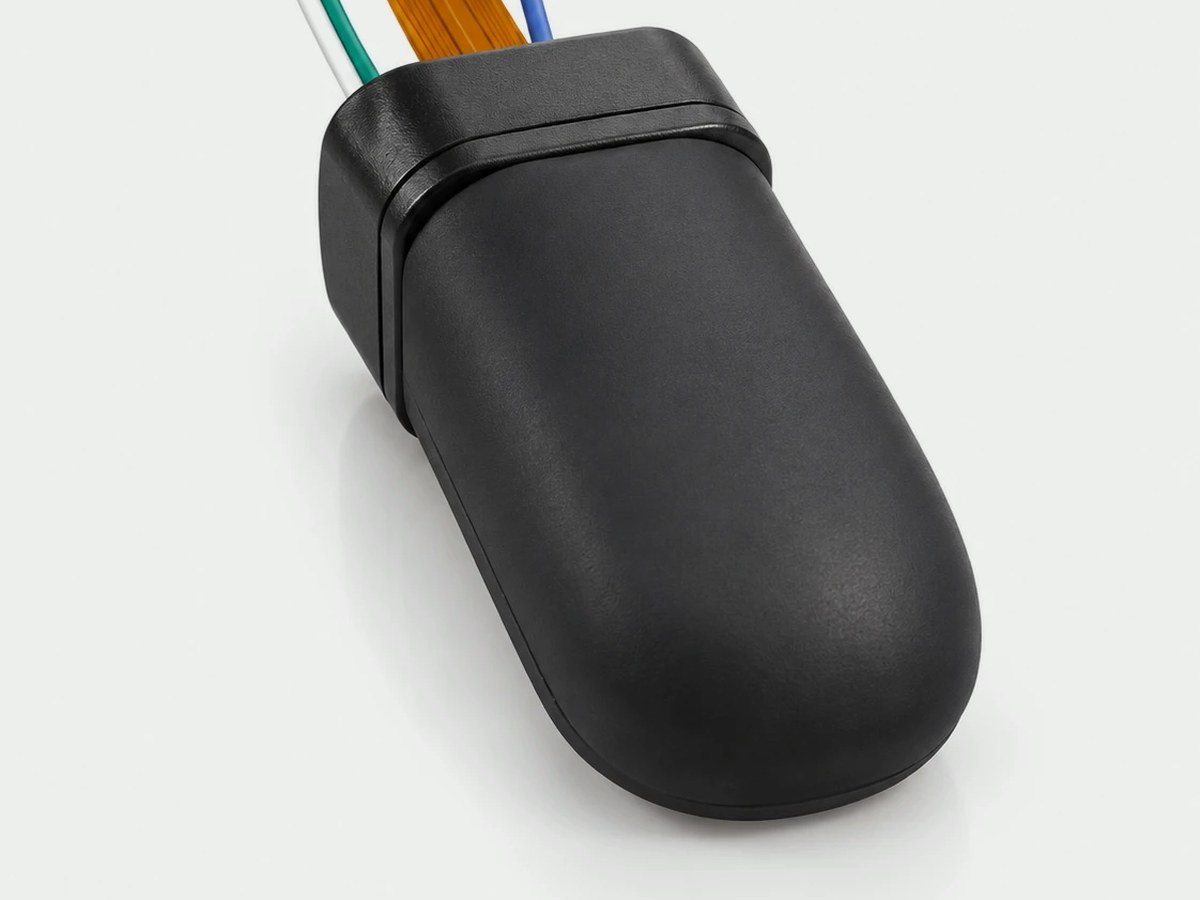
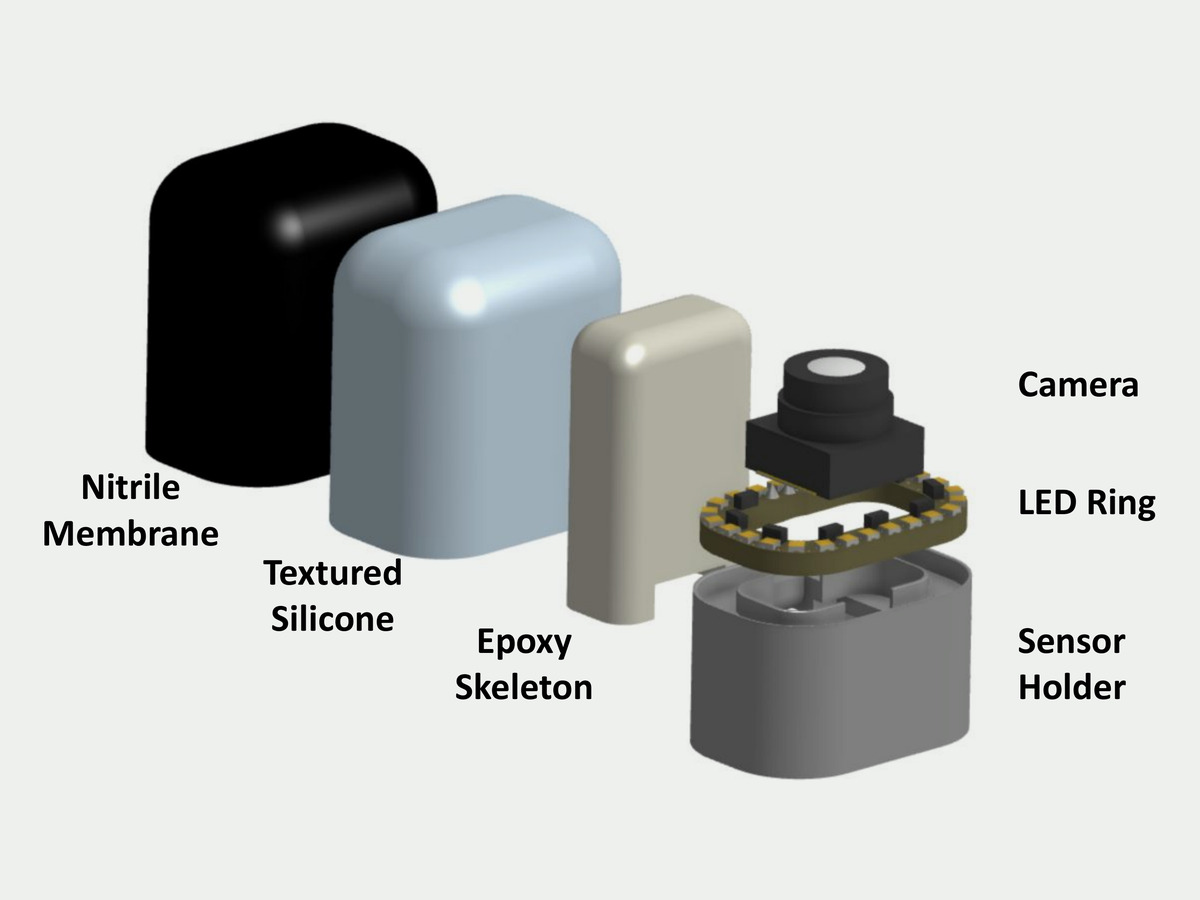
Fingertip
Textured silicone over a clear epoxy skeleton with an LED ring.
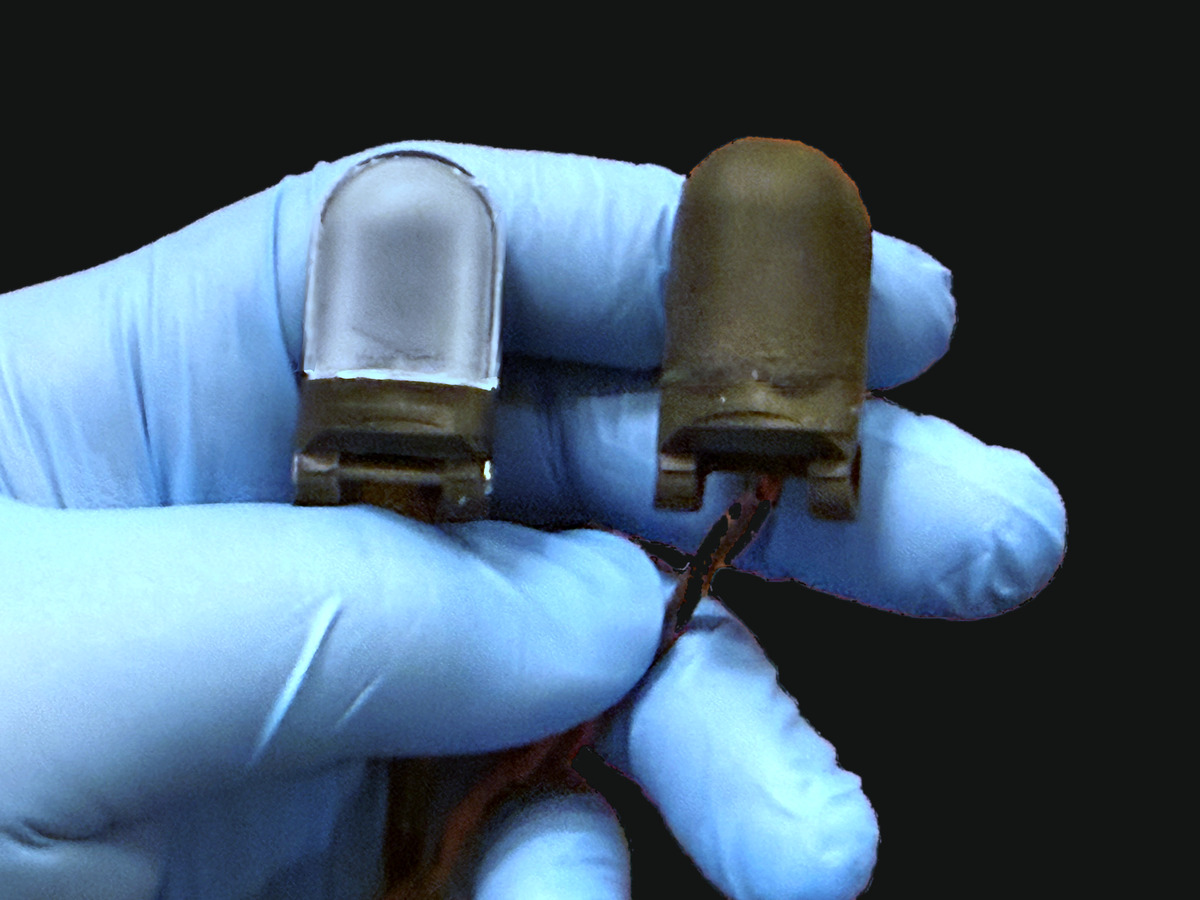
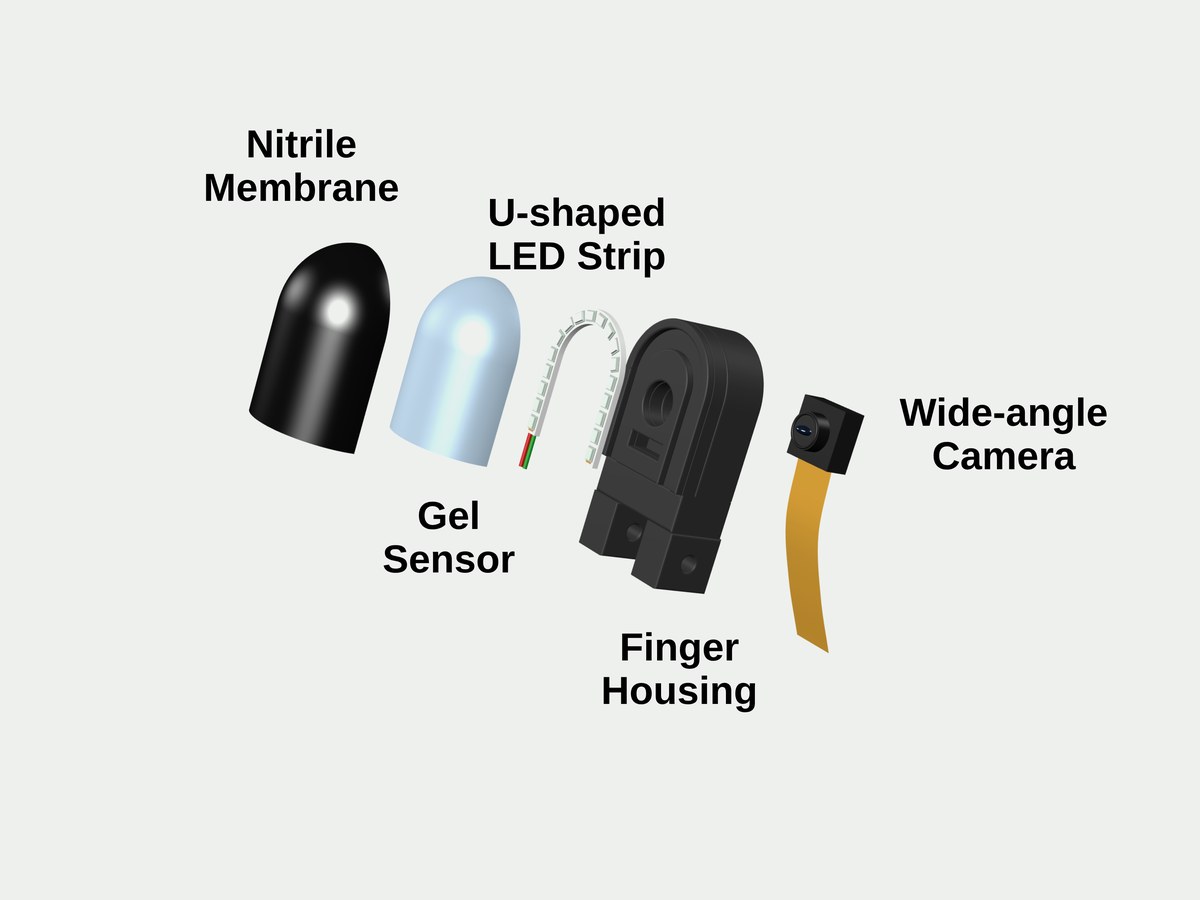
Humanoid finger
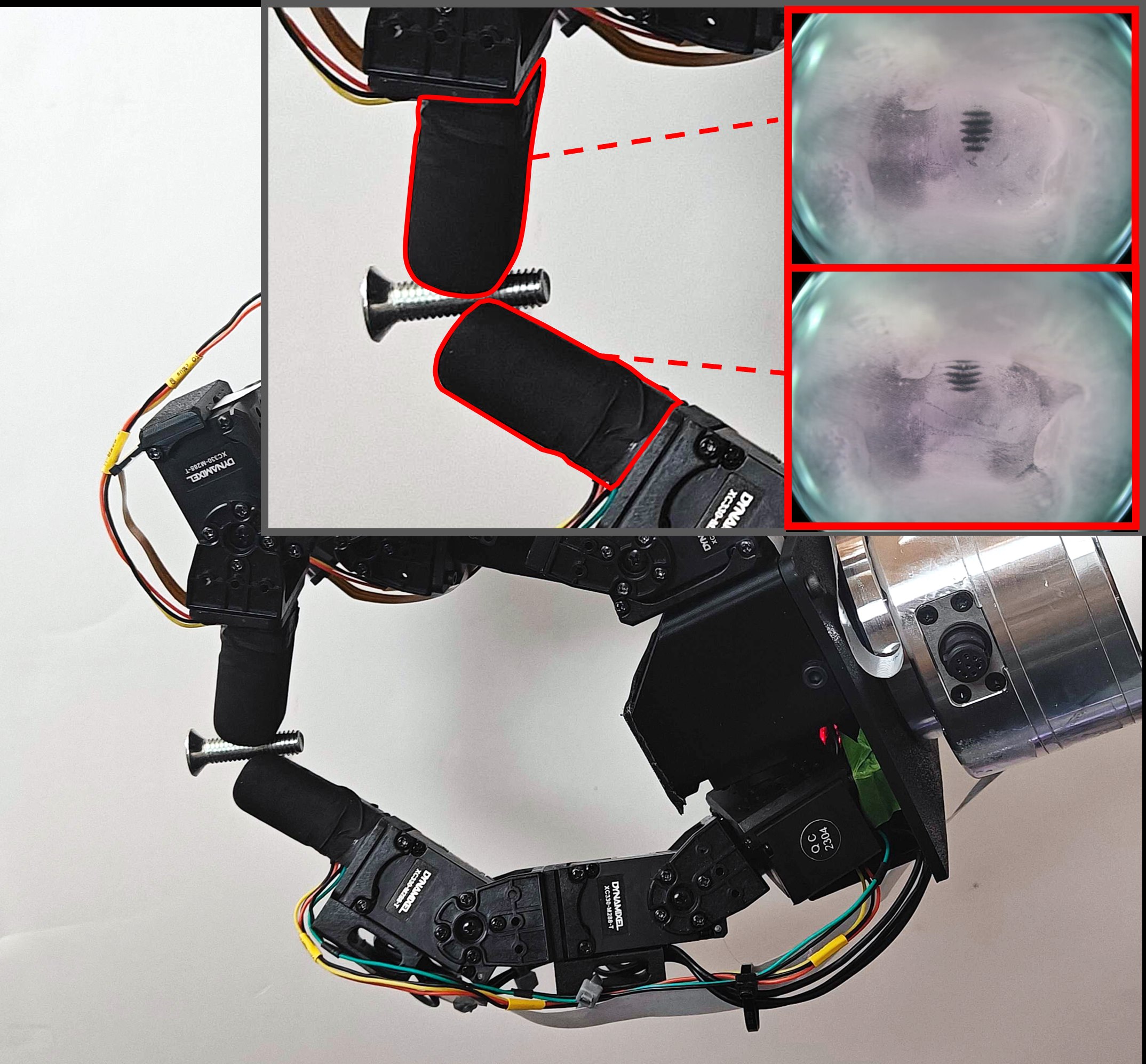
About 17 mm wide with front-facing tactile coverage.
What GlowTact measures.
It sees two millinewtons.
DAT / 01 Light touch
An M&M at 1.0 g (9.8 mN) and an M2 screw at 0.2 g (1.96 mN) both show in the raw frame under their own weight.
Controlled threshold test: 0.12 N median minimum detectable force at SNR = 3 across 10 probes.
One dark image, turned in three dimensions.
DAT / 02 Geometry
Relief from a single frame’s darkening resolves M1 threads at 0.25 mm pitch.
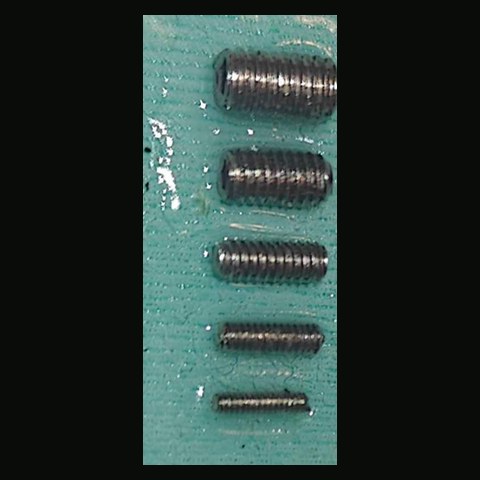
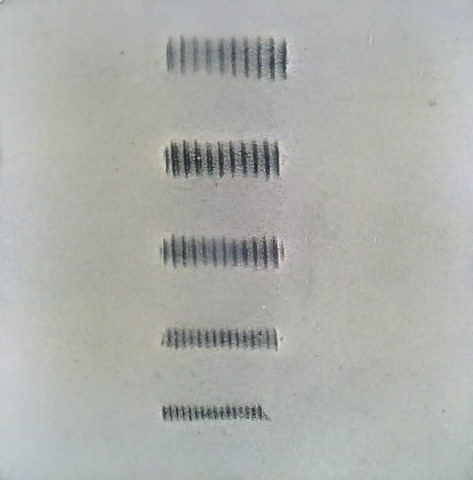 M3 to M1 screw threads
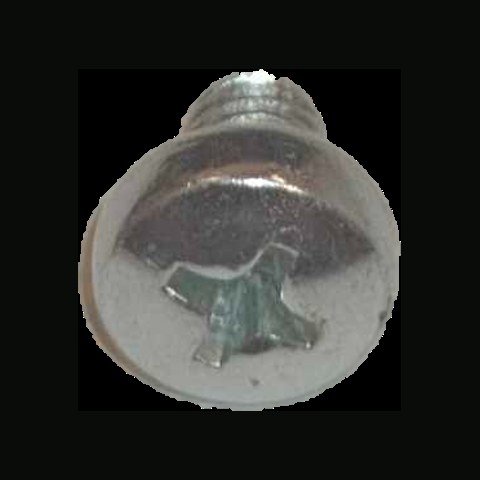
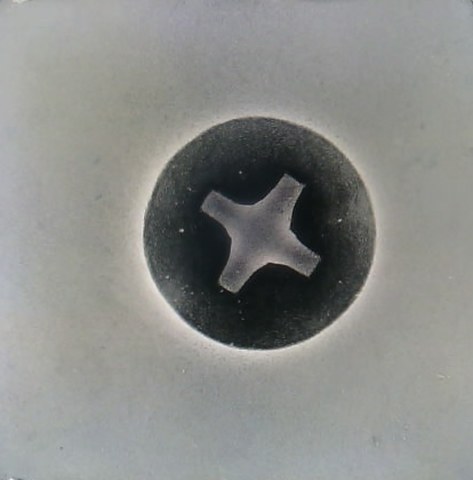 Phillips screw head
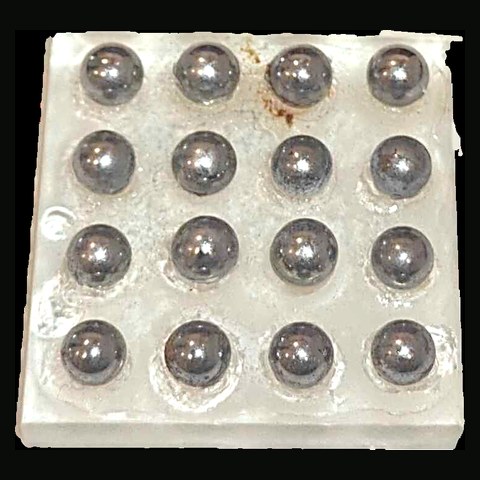
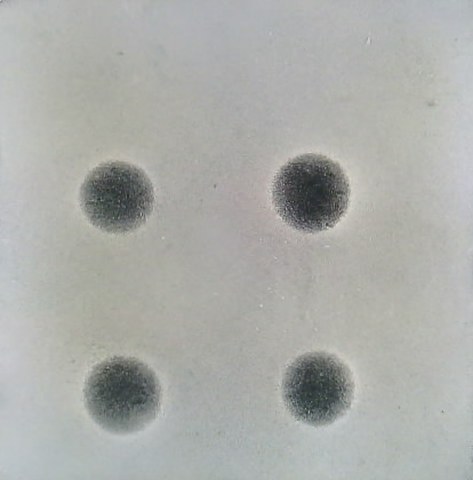 4.7 mm calibration balls
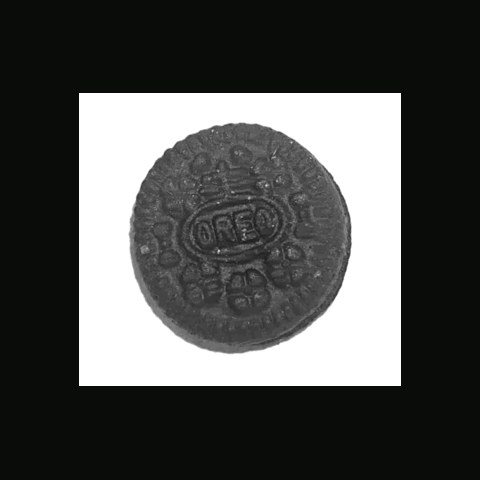
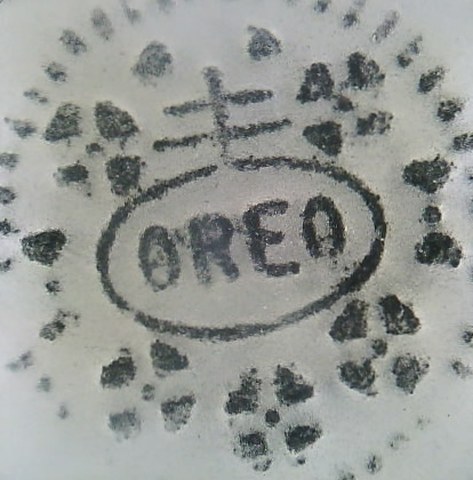 Oreo embossing
Relief recovered from a single tactile frame.
It reads the sideways pull.
DAT / 03 Shear
Marker-free shear from the gel’s own speckle, usable over 97.8 % of the pad.
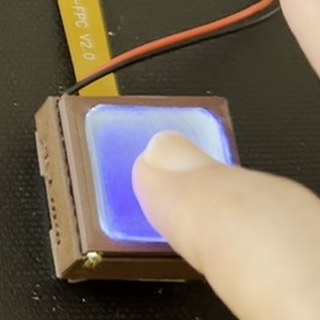 FINGERTIP / 6.1 S
Pressed and dragged across the pad
FINGERTIP / 6.1 S
Pressed and dragged across the pad
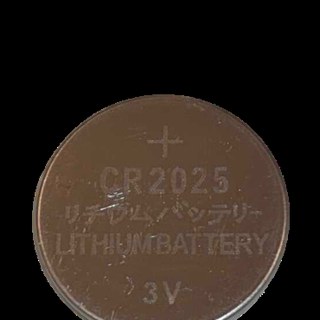 COIN CELL / 8.9 S
The cell's edge loaded and slid
COIN CELL / 8.9 S
The cell's edge loaded and slid
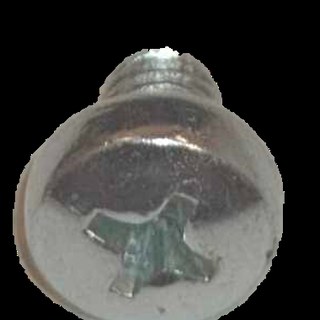 M5 PHILLIPS HEAD / 13.6 S
A cross recess under tangential load
M5 PHILLIPS HEAD / 13.6 S
A cross recess under tangential load
Readouts per frame: slide, twist, spread, slip; the red outline is the contact.
Marker-free: the field comes from the gel’s own speckle, with no printed marker layer.
Straight from the camera.
The raw feed on a tablet, no processing: a fingertip, then a coin through denim.
GlowTact
Simple and Compact Vision-Based Tactile Sensing with High Sensitivity and Spatial Resolution
Massachusetts Institute of Technology and Harvard University. *Equal contribution.
Vision-based tactile sensors provide rich contact information for robotic manipulation, but existing designs can be hard to simplify and adapt to the size and constraints of humanoid fingertips. GlowTact is a pressure-responsive vision-based tactile sensing mechanism that directly visualizes contact pressure: it requires only single-color, non-directional illumination, and the raw tactile image directly represents the pressure distribution without explicit geometry reconstruction. The paper demonstrates gram-scale contact detection, accurate normal-force estimation, and reconstruction of fine contact geometry, including M1 screw threads.